Community Kitchens: Overlooked Critical Infrastructure in Cities
by Connie Bickerton & Yoann Clouet
Typically, we think of critical infrastructures as roads, electricity, and pipes – the hard physical infrastructures that modern society depends upon. Yet, in light of cities’ evolving vulnerabilities (such as the frequency and severity of extreme weather events, socio-economic inequities, isolation and loneliness, and resource scarcity to name a few), critical infrastructures are increasingly considered multidimensional and just “as much about space, place, and ecology and culture” as the physical infrastructures that we use (Steele & Legacy, 2017).
The aforementioned vulnerabilities that cities face are a result of increasing environmental and social crises which, aside from their direct impacts, herald a future of “increasing disruption and unpredictability” to the globalised systems and networks on which we rely for essential services, including food (McShane & Coffery, 2022, p2). Threats to such globalised systems force us to reevaluate the critical nature of localised services. COVID-19 in particular highlighted the flaws of this dependency worldwide, as well as the “critical nature of social infrastructure to both disaster responses and long-term community building and resilience” (McShane & Coffey, 2022). Based on this, the scope of infrastructure considered ‘critical’ to urban fabrics cannot be limited to the needs of mobility, housing, electricity, or water management – as it historically has – but must include multidimensional functions that support cities’ emerging vulnerabilities and adaptive capacities in times of crises, including our food supply system, social support networks, and welfare provisions.
Within this context, this article presents multidimensional community spaces, particularly community kitchens, as critical infrastructures, providing essential services to both the social and logistic needs of urban communities as well serving future sustainability and resilience infrastructure necessary in cities.


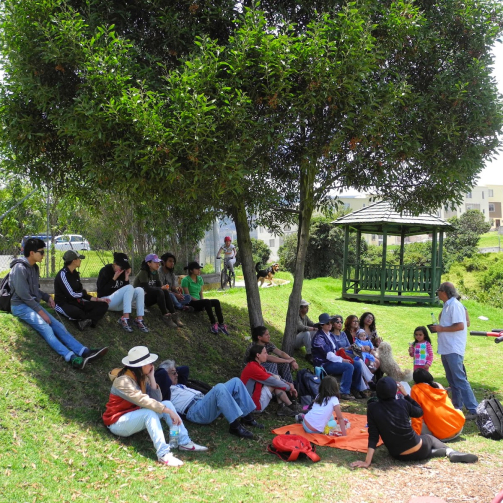
Photos: Pew Nguyen via Pexels (left) & Dámaris Azócar via Unsplash (right)
Urban social infrastructure
Social infrastructures are places that enable gathering and interaction: they support connection, community, and sociality. While physical, they offer intangible and essential services for humans as innately social animals (Latham & Layton, 2022). They range from a café, a restaurant, the gym, a church, to a park. They are important to the fabric of urban environments as third places – social environments separate from your home (first place), and your workplace or school (second place) – that foster everyday urban encounters. Their ‘everyday’ nature serves as a key domain for interaction, negotiation, resistance, and differentiation, and importantly, allow people to live comfortably alongside one another (Graham & McFarlane, 2015; Latham & Layton, 2022). With isolation and loneliness rates in cities (WHO Commission on Social Connection, 2026), social infrastructures are essential places for social and cultural activity, providing meaning, worth and liveability to city life, as well as being vital to the development of neighbourhoods (Latham & Layton, 2022). They are the spaces that humanise cities, and remind inhabitants that cities are human creations. Social infrastructures have the ability to provide social support (Hobfall, 2001), a proven valuable resource for people undergoing stress, and especially valuable to strengthen community resilience after socio-natural disasters like wildfires (Sandoval-Díaz et al., 2025).
Among these third places, eating together is arguably the most universal, but in many cities, it has also become the most commercialised, with the price of ‘going out’ for a meal placing this everyday social encounter increasingly out of reach. Community kitchens, and informal food and market spaces more broadly, are among the few remaining third places where sociality over food is not conditional on being able to pay for it.
WHAT IS A COMMUNITY KITHCEN?
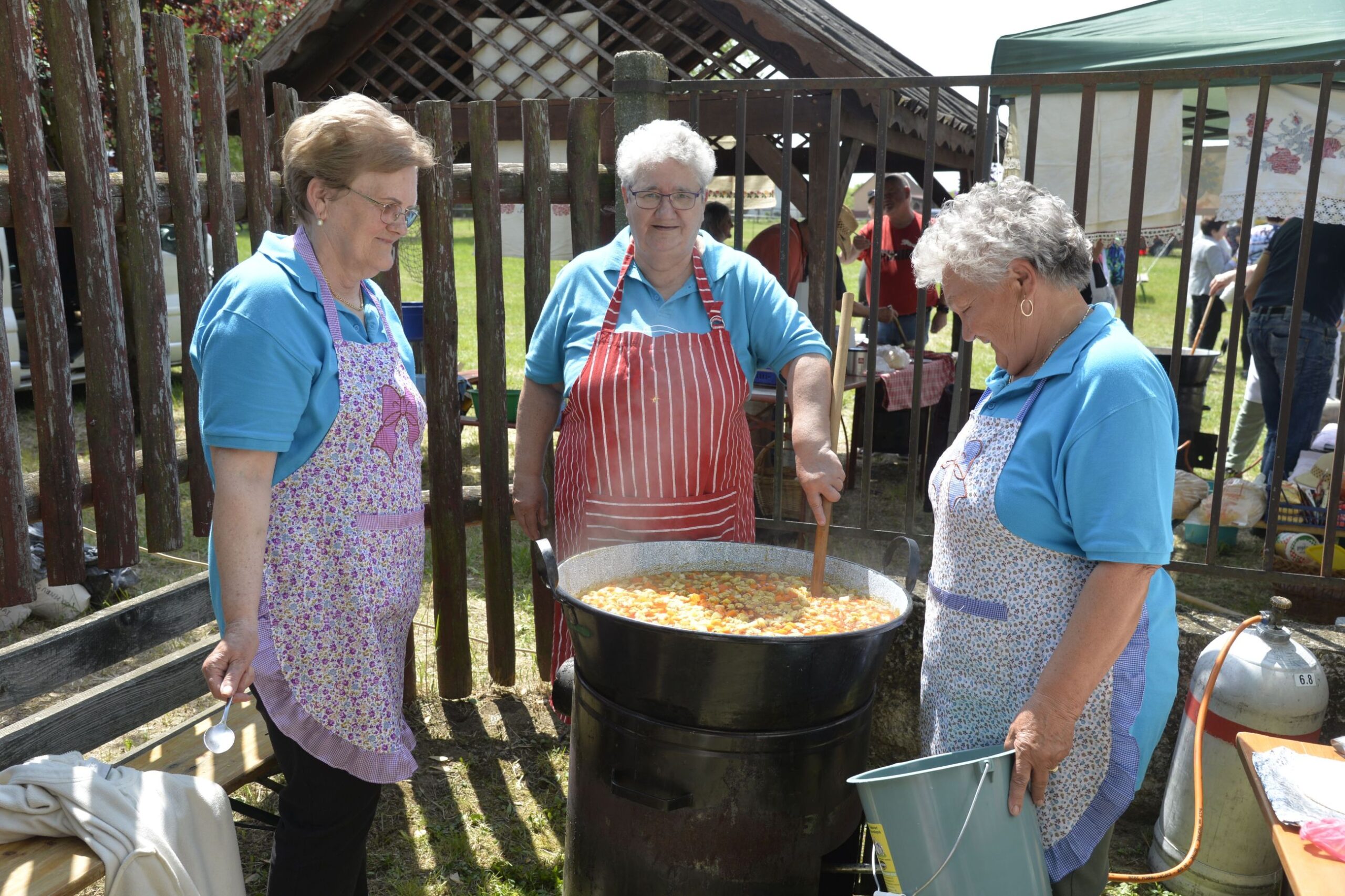
A community kitchen is an inclusive and participatory physical place for people to prepare and share food together. They are often hosted in localised public spaces – councils, churches, charities, schools, and sometimes private spaces like people’s homes, or restaurants. Although they may vary, they usually aim to improve social cohesion, connection, and community building; to help reduce food waste; and to provide practical team working and learning experiences. Distinct from food banks or soup kitchens, whose main focus is to address food insecurity, community kitchens offer a form of social infrastructure in addition to food provisioning.
A community kitchen uses what is available to them in the form of donations, rescued produce, or participants’ offerings. In this way, they can also act in resistance to the “food regime”, engaging with urban agroecology whereby food is not commercialised, and is produced only for consumption rather than for distribution or sale (Tornaghi, 2014).
Throughout history, and across cultures, sourcing, preparing, and eating food together has long served as a meaningful and nourishing social infrastructure. It is an affect-charged social practice often representing more than the meal itself – as an offering of peace, forgiveness, or acceptance (Mauss, 1990; Fischler, 2011). For example, street food is a community anchor in Kuala Lumpur (Mun, 2020), and sharing the Ethiopian Injera can symbolize unity and community (Smith, 2026). Community kitchens reclaim this same social function – the shared table and everyday encounter – but deliberately strip it of the commercial logic, returning the meal to something offered rather than something sold.
How can community kitchens serve as critical infrastructure?
In light of evolving environmental and social crises, McShane & Coffey (2022) expand the concept of critical infrastructures: they propose to position community hubs as social infrastructures that act as “anchor institutions for addressing vulnerability, building community resilience, and fostering adaptive responses to enable more socially and environmentally just development”. Community kitchens fulfil this role in three interconnected ways: by building community and resilience, by addressing food insecurity, and by advancing socially and environmentally just development.
1. COMMUNITY BUILDING AND RESILIENCE (McShane & Coffey, 2022)
Routinised community kitchen events become embedded social arrangements within communities, providing cultural meaning to participants (Star, 1999). These inclusive, accessible and free spaces serve important ‘everyday’ infrastructures to the urban fabric as a key domain for interaction, negotiation, resistance, and differentiation (Graham and McFarlane, 2015). In this way, community kitchens act as essential social infrastructures for sociality, community, as well as educative and teamworking opportunities, in a time where isolation and loneliness in cities have become concerning issues. This everyday resilience-building becomes especially critical during acute crises: as seen after wildfires and other socio-natural disasters, the social bonds and community hubs sustained by routine gathering are often what people rely on most amid displacement and loss, alongside essential provisions like food and shelter (Sandoval-Díaz et al., 2025).
2. FOOD INSECURITY (Kumareswaran & Jayasinghe, 2022)
By their nature, community kitchens address food insecurity by providing meals for community members. In response to the rising cost and inaccessibility of a healthy diet, community kitchens often provide free or donation-based meals that directly address food-access vulnerability, in effect serving as welfare infrastructure in their own right.
3. SOCIAL AND ENVIRONMENTALLY JUST DEVELOPMENT (McShane & Coffey, 2022)
In response to wasteful, linear food flows and unsustainable food planning (Tornaghi, 2014), community kitchens often engage in non-commercial, local food production, and in rescuing and redistributing surplus food – contributing directly to the circular management of food in cities. Rescuing surplus is a valuable stopgap, but the more transformative role lies further upstream: community kitchens that source directly from local, agroecological producers cut out intermediaries altogether, shortening supply chains and building more resilient, equitable relationships between growers and eaters.
Beyond meeting immediate needs, community kitchens act as agents of change: modelling and promoting a more sustainable, localised food supply chain, and advocating through daily practice as much as through campaigning, for the ‘right to good food’ at the neighbourhood level. In doing so, they do not simply respond to vulnerability but actively work to reduce it.
Photo by Zsolt Bodnár via Pexels
Summary
Community kitchens then, are not a marginal or nostalgic form of neighbourhood life – they are instead the multidimensional, everyday infrastructure that should fall within the scope of ‘critical infrastructure’ in the first place. Across community building and resilience, food security, environmentally just and circular food systems, and their roles as agents of change, community kitchens perform the work that policies (EU Directive 2022/2557) do not yet recognize: they operate at the local, everyday scale that national food-distributions regulation overlooks, and they do so through care, participation and reciprocity rather than supply chains alone. In cities shaped by compounding social and environmental crises, the case for treating this kind of social infrastructure as critical, rather than optional, is only growing stronger.
At iUE, we are setting to test this in practice in the EU-funded project ROOTED. Under Horizon Europe (2026–2030), ROOTED is co-creating a network of more than 50 Landed Community Kitchens across 20 cities and 8 countries: care- and equity-centred neighbourhood service infrastructures that connect urban residents directly with local, agroecological food producers. In joining the project, we are not only studying community kitchens as an interesting social phenomenon – it is helping build the evidence, and the infrastructure itself, for the argument this article has made: that cities cannot be resilient, food-secure, or genuinely liveable without recognising spaces like these as the critical infrastructure they already are.
References
Abram, S., Bernhardt, F., Flückiger, N., Hofstetter, J. L., & Maaroufi, M. (2025): Cooking, Caring, and Commoning: Grassroots Community Kitchens Across Five European Cities. Urban Planning, 10, Article 10145. https://doi.org/10.17645/up.10145
Fischler, C. (2011): Commensality, Society and Culture. Social Science Information, 50 (3-4), pp. 528-548. https://doi.org/10.1177/0539018411413963
Graham, S. and McFarlane, C. (eds.) (2015): Infrastructural Lives: Urban infrastructure in context. London: Routledge.
Hobfall, S. (2001): Social Support and Stress. International Encyclopedia of the Social & Behavioral Sciences, pp. 14461-14465.
Kumareswaran, K., Jayasinghe, G.Y. (2022): Systematic review on ensuring the global food security and covid-19 pandemic resilient food systems: towards accomplishing sustainable development goals targets. Discov Sustain, 3 (29).
Latham, A., & Layton, J. (2022): Social infrastructure: why it matters and how urban geographers might study it. Urban Geography, 43(5), pp. 659–668. https://doi.org/10.1080/02723638.2021.2003609
Mauss, M. (1990): The Gift: The Form and Reason for Exchange in Archaic Societies (W.D. Halls, Trans.; 1st ed.). Routledge. https://doi.org/10.4324/9780203407448
McShane, I., Coffey, B. (2022): Rethinking community hubs: community facilities as critical infrastructure. Current Opinion in Environmental Sustainability, 54, Article 101149. https://doi.org/10.1016/j.cosust.2022.101149
Mun, J. (2020): Street food as community anchor. The City At Eye Level. Available at: https://thecityateyelevel.com/stories/street-food-as-community-anchor/
Sandoval-Díaz, J., Navarrete-Valladares, C., Vega-Ortega, J., Suazo-Muñoz, C., Gallegos Riquelme, J., Sandoval-Obando, E., Valenzuela, C. (2025): Community resilience to wildfires: A systematic review of impacts, coping strategies, indicators, and governance challenges. Progress in Disaster Science, (27), 100447.
Smith, J. (2026): Honoring Injera & the Communal Nature of Ethiopian Food. Black Restaurant Week. Available at: https://blackrestaurantweeks.com/honoring-injera-the-communal-nature-of-ethiopian-food/
Star, S.L., (1999): The ethnography of infrastructure. American behavioral scientist, 43 (3), pp. 377–391.
Steele, W., Legacy, C. (2017): Critical Urban Infrastructure. Urban Policy and Research, 35(1), pp. 1–6. https://doi.org/10.1080/08111146.2017.1283751
Tornaghi, C. (2014): How to set up your own urban agricultural project with a socio-environmental justice perspective. A guide for citizens, community groups and organisations. Leeds: The University of Leeds.
World Health Organisation (WHO) (2026): Commission on Social Connection. Available at: https://www.who.int/groups/commission-on-social-connection/report
TOP PHOTO: Maarten van den Heuvel, via Unsplash
Abram, S., Bernhardt, F., Flückiger, N., Hofstetter, J. L., & Maaroufi, M. (2025): Cooking, Caring, and Commoning: Grassroots Community Kitchens Across Five European Cities. Urban Planning, 10, Article 10145. https://doi.org/10.17645/up.10145
Fischler, C. (2011): Commensality, Society and Culture. Social Science Information, 50 (3-4), pp. 528-548. https://doi.org/10.1177/0539018411413963
Graham, S. and McFarlane, C. (eds.) (2015): Infrastructural Lives: Urban infrastructure in context. London: Routledge.
Hobfall, S. (2001): Social Support and Stress. International Encyclopedia of the Social & Behavioral Sciences, pp. 14461-14465.
Kumareswaran, K., Jayasinghe, G.Y. (2022): Systematic review on ensuring the global food security and covid-19 pandemic resilient food systems: towards accomplishing sustainable development goals targets. Discov Sustain, 3 (29).
Latham, A., & Layton, J. (2022): Social infrastructure: why it matters and how urban geographers might study it. Urban Geography, 43(5), pp. 659–668. https://doi.org/10.1080/02723638.2021.2003609
Mauss, M. (1990): The Gift: The Form and Reason for Exchange in Archaic Societies (W.D. Halls, Trans.; 1st ed.). Routledge. https://doi.org/10.4324/9780203407448
McShane, I., Coffey, B. (2022): Rethinking community hubs: community facilities as critical infrastructure. Current Opinion in Environmental Sustainability, 54, Article 101149. https://doi.org/10.1016/j.cosust.2022.101149
Mun, J. (2020): Street food as community anchor. The City At Eye Level. Available at: https://thecityateyelevel.com/stories/street-food-as-community-anchor/
Sandoval-Díaz, J., Navarrete-Valladares, C., Vega-Ortega, J., Suazo-Muñoz, C., Gallegos Riquelme, J., Sandoval-Obando, E., Valenzuela, C. (2025): Community resilience to wildfires: A systematic review of impacts, coping strategies, indicators, and governance challenges. Progress in Disaster Science, (27), 100447.
Smith, J. (2026): Honoring Injera & the Communal Nature of Ethiopian Food. Black Restaurant Week. Available at: https://blackrestaurantweeks.com/honoring-injera-the-communal-nature-of-ethiopian-food/
Star, S.L., (1999): The ethnography of infrastructure. American behavioral scientist, 43 (3), pp. 377–391.
Steele, W., Legacy, C. (2017): Critical Urban Infrastructure. Urban Policy and Research, 35(1), pp. 1–6. https://doi.org/10.1080/08111146.2017.1283751
Tornaghi, C. (2014): How to set up your own urban agricultural project with a socio-environmental justice perspective. A guide for citizens, community groups and organisations. Leeds: The University of Leeds.
World Health Organisation (WHO) (2026): Commission on Social Connection. Available at: https://www.who.int/groups/commission-on-social-connection/report
TOP PHOTO: Maarten van den Heuvel, via Unsplash