
Urban Living Labs for Soil Health
With over 80% of Europeans expected to live in cities by 2050, the foundation of our urban ecosystems is under pressure: the soil beneath our feet. Often perceived merely as a walkable surface or a platform for construction, urban soils are a living resource, essential for climate resilience in cities. Urban soils are the silent engine of our cities, performing critical ecosystem services that are often taken for granted. They act as a “sponge,” absorbing and storing up to 400 L/m² of water, which significantly mitigates flooding risks and heat island effects through evaporation and transpiration. Furthermore, healthy urban soils support biodiversity and enable urban food production through community gardens and green roofs.
As part of the research project URSOILL, we support the co-creation process of five urban Living Labs for soil health. Together with our partner POLIMI, we recently prepared a roadmap for their development, with the overarching objective to move urban soil health from a footnote in planning to a core pillar of city-making.
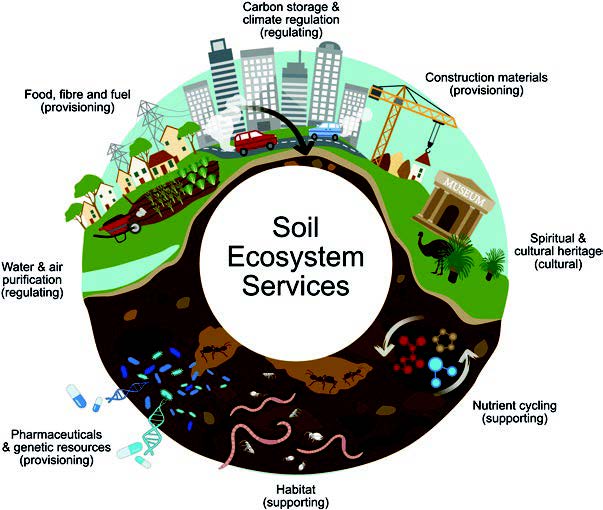
Figure 1: Schematic diagram of soil ecosystem services (Gleeson, 2022)
Urban soils: A complex matter
Urban soils are far more complex and heterogeneous than their agricultural or forest counterparts: they have been deeply modified by human history, containing layers of construction debris, legacy industrial contamination, and varying degrees of artificialisation. Despite essential functions such as storing carbon, managing stormwater and buffering heat islands, they remain less researched and undervalued. Because they vary significantly both horizontally across a territory and vertically within a soil profile, they require highly localized, site-specific diagnostic data before any intervention can begin.
Urban land use vs. urban soil health
As with many ambitions in planning, restoring soil health in a city is a wicked problem: a complex challenge with no single solution and many conflicting interests. Urban environments face:
» Competing land uses: need for space for housing, parking, and infrastructure, which directly competes with the need for unsealed, ecological soil preservation.
» Stakeholder density and diversity: decisions in city-making involve a dense web of actors, from municipal departments (often working in silos) and private developers to residents and community groups.
» Spatial availability constraints: unlike vast rural landscapes, urban interventions must happen in small, fragmented plots where every square metre is contested.
» Continuity: traditional planning often operates on a parcel-by-parcel logic that ignores the ecological continuity and subsurface connectivity required for healthy soil functions.
URSOILL approach: Co-creating Living Labs for urban soil health
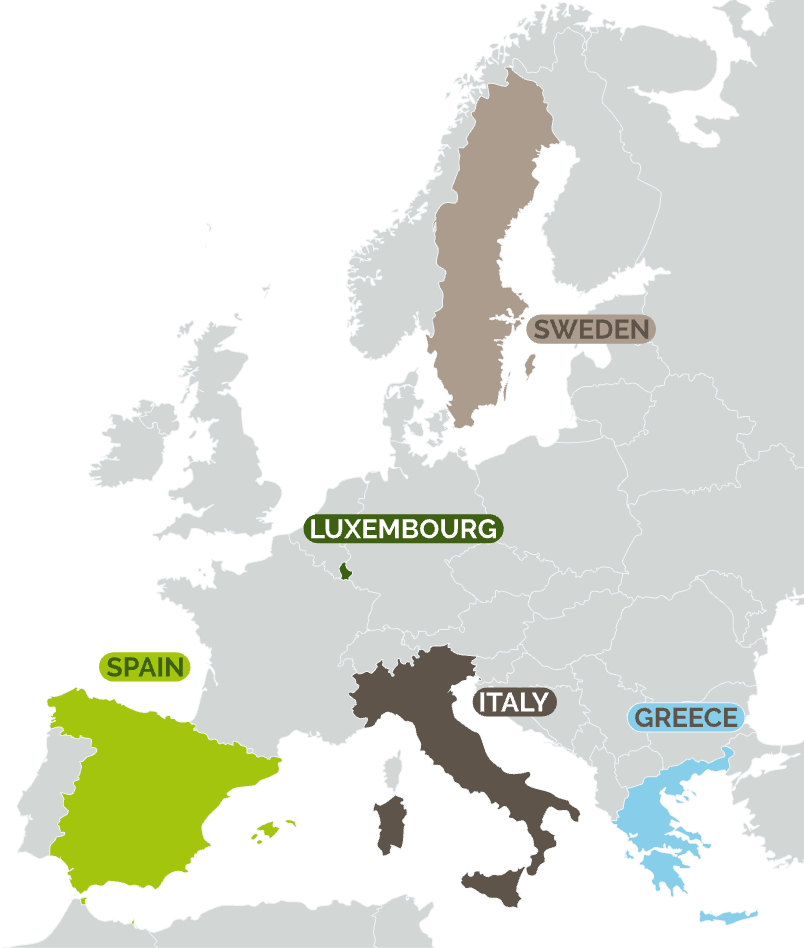
To navigate this complexity, URSOILL established five Urban Living Labs (ULLs) across Europe.
Located in Sweden (Humid Continental), Spain (Atlantic), Italy (Alpine), Greece (Mediterranean), and Luxembourg (Continental), the five Living Labs represent Europe’s diverse climactic and socio-economic contexts. These are not simple research projects on the ground: they are user-centric, open innovation ecosystems where scientists, authorities, public authorities and citizens “make together and learn together” to develop, test, and implement solutions for urban soil restoration.
The transition to healthier urban soils will not happen through isolated projects or technical solutions alone. It requires cities to recognise soil as critical infrastructure and to create the conditions for long-term collaboration between science, policy, practice, communities, and the living environment. URSOILL offers one pathway to make this shift happen: bringing diverse actors together, testing solutions in real urban contexts, learning from what works, and turning that knowledge into lasting changes in planning and governance. The experience of the five Living Labs is intended not as a blueprint to be replicated unchanged, but as an invitation for other cities to explore what a Living Lab for urban soil health could look like in their own context. If we want resilient cities by 2050, we need to start investing in the health of the ground they are built on today. Discover the URSOILL Living Lab Methodology developed by iUE and POLIMI.
Figure 1: Gleeson, D. B. (2022): Soil Biological Processes in Urban Soils. In: Rate, A.W. (eds.) Urban Soils. Progress in Soil Science. Springer, Cham, pp 243-291. https://doi.org/10.1007/978-3-030-87316-5_8