
iUE AT PLACEMAKING WEEK EUROPE 2026: EXPLORING COLLECTIVE IMAGINARIES
Photos: Carlos Ruiz
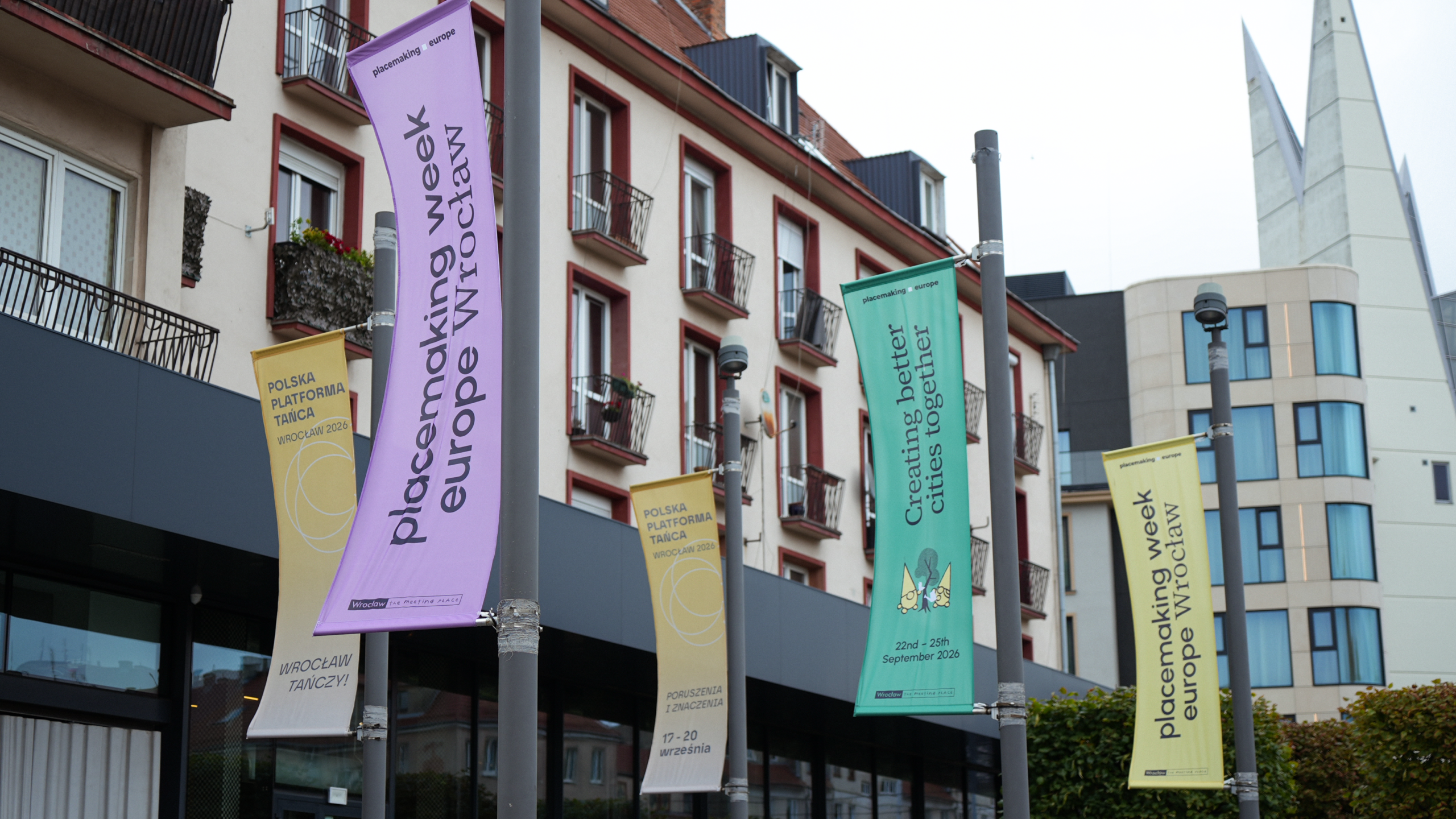
In September 2026, iUE’s Mariana Binder and Samir Amin attended Placemaking Week Europe in Wrocław, Poland. It was, once again, a unique opportunity to meet with colleagues from all corners of the world and discuss together how to shape inclusive, inspiring and sustainable public spaces that connect and care for all. Amid a packed week, we attended multiple sessions and facilitated one workshop. Our team’s highlights included Julia Barry’s session on storytelling in the attention economy, an interactive panel on scaling tactical urbanism, and the launch of Placemaking en Español, a network of Spanish-speaking placemakers.
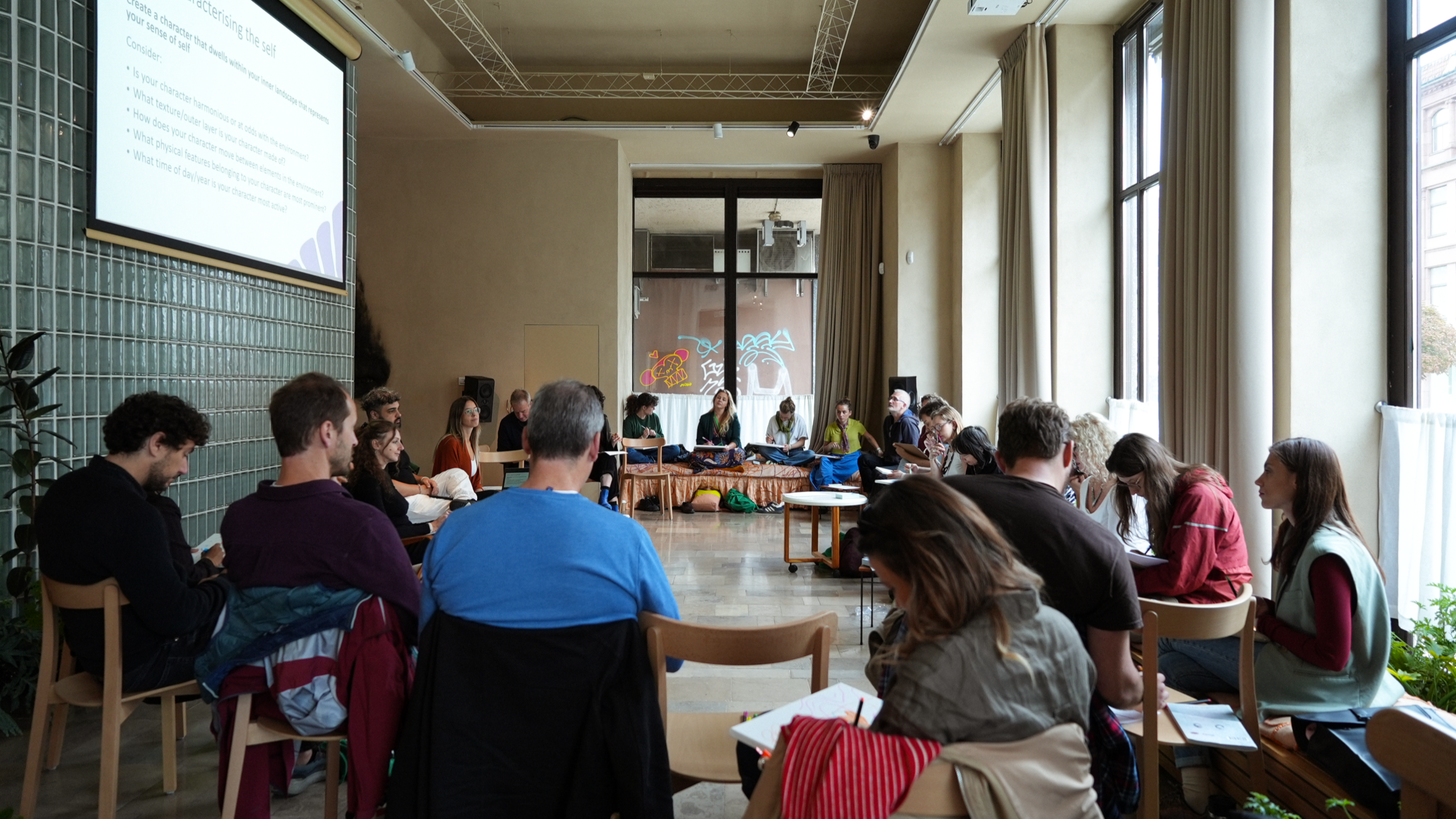
On Friday 25th, Samir and Mariana held an interactive session in collaboration with Lenka Kuricova: “(Exploring) Identity: Inner Landscapes and Collective Imaginaries”. The gist of the session was a hands-on group exploration of how we can use imaginaries to represent our identities and how we can experience group setting through the interactions of these imaginaries. The session sought to establish the unifying experience of forming collective imaginaries in a group and to demonstrate the power of using imaginaries in a participatory setting. Allowing people to represent themselves in fictional ways allows us to navigate issues of power, representation and conflict without drawing out complex emotion. After the session in Wrocław, we were left with several lasting feelings.
The first was that practitioners, especially those working in participatory spaces, seem to all need a break. A number of people commented on how they liked the session as it gave them a minute to slow down, decompress, and acknowledge themselves in amongst a week of movement, discussion and big picture thinking. It seems especially poignant to remember, as Lenka put it, that Placemakers are people too and that sometimes they also need spaces to feel. We wondered after what sort of impact this type of time and space may have on the practitioner environment. Especially when the news is so bleak, when the far-right seem to be winning, when our capacities to make tangible change seem to be shrinking. Maybe we all need to take a moment sometimes to look at our own identities, to experience our emotions, and to feel close to others fighting the same fight.
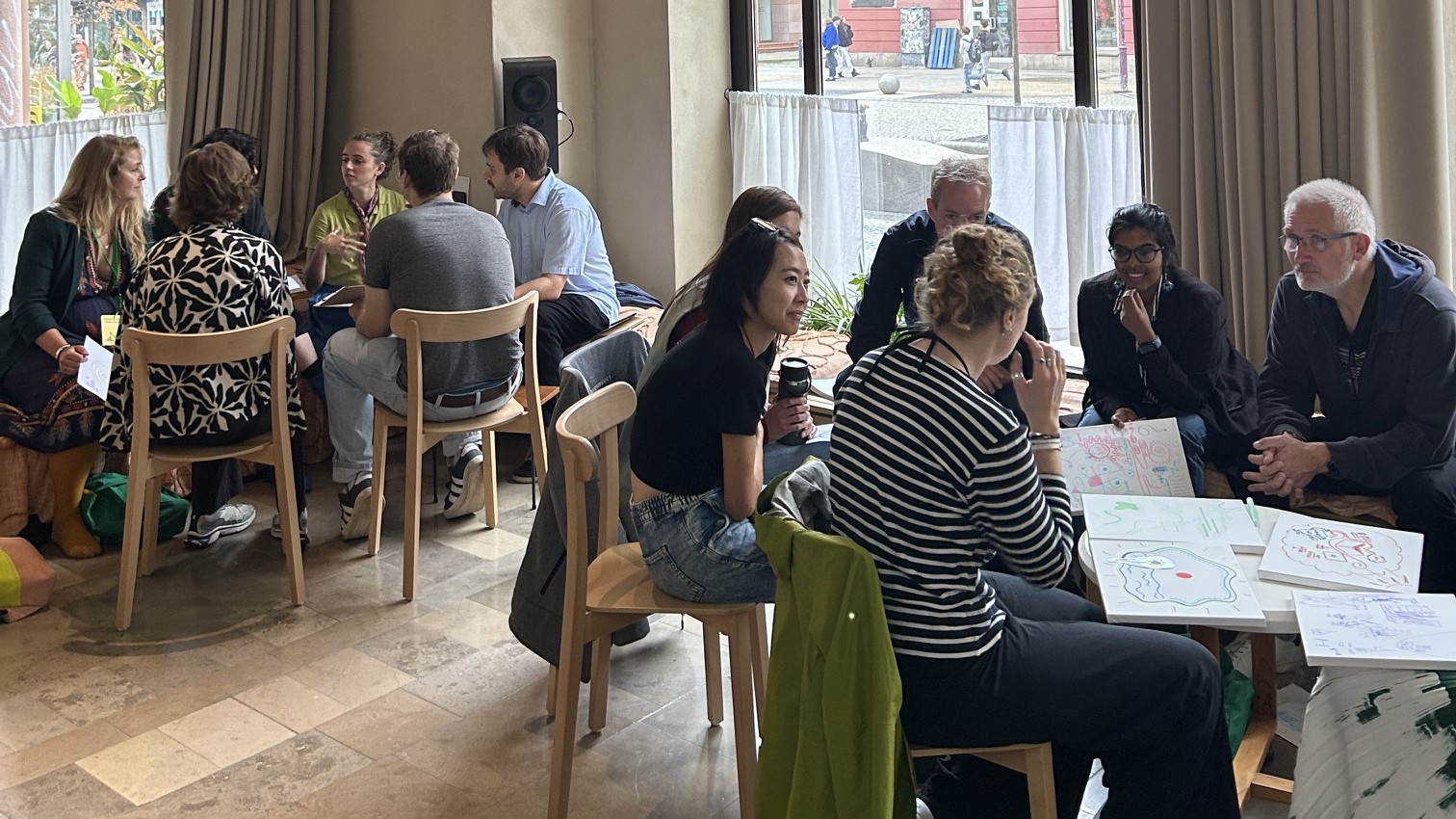
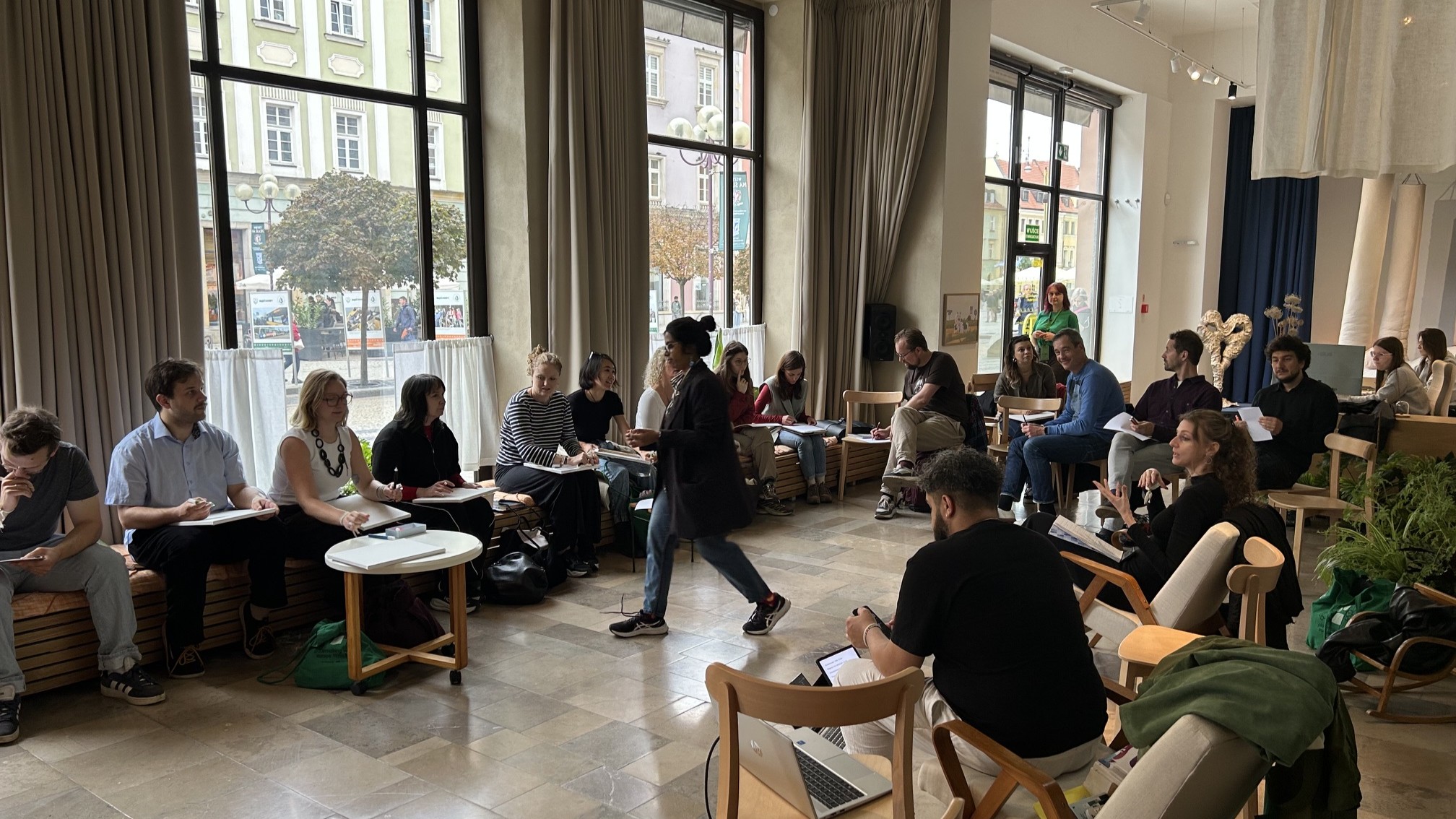
Another lasting feeling from the session was that instinctively people understood the value of imaginaries. That makes sense. The impetus for running this session was to play with a fundamental that is the backbone to all imaginary storytelling: that humans use imagery to represent things about themselves too complex to explain. We wanted to prod an assumption often made by storytellers in participatory spaces: that this can be harnessed, utilized and leveraged to formulate impactful and artistically-geared sessions. And placemaking came through. After some time, every person in a group of almost 30 people, whatever background, nationality or complexity of self-image, was able to sketch themselves and to intertwine their projections with others in the space. We didn’t spend a long time explaining the value, because participants got it from the play of the session. They understood how this type of process could aid in idea generation, futures visioning, even design valorisation for new spaces and places.
For us, the session put a new wind in our sail. It validated our assertions about the power of storytelling in citizen participation. It reminded us that identity exploration and self-empowerment do have a role in practitioner spaces. And most importantly, it reminded us that, as we strive to make our urban environments more inclusive and more representative of the people who live there, we are surrounded by likeminded people doing the same. See you next year, Placemakers!