Ecuadorian case studies published by Columbia University's UCCRN
by Tannya Pico
The Urban Climate Change Research Network (UCCRN) brings together over 2000 global experts from universities and research institutions to study climate change in cities. Its members include scientists, planners, economists, and urban designers working on mitigation and adaptation.
Based in Columbia University (New York, USA), the network supports advanced research, shares knowledge with city leaders, and helps stakeholders understand climate impacts on urban areas. It also provides timely, practical insights to support city action, promote best practices, and bridge gaps between more and less prepared cities.
Ecuadorian case studies on Nature-based Solutions
Developed as part of her PhD in Urban Development and Governance at IHS, Erasmus University Rotterdam, two case studies by iUE’s project manager Tannya Pico have been recently published by UCCRN.
They showcase Nature-based Solutions (NbS) from the Ecuadorian capital, Quito, and highlight how local community innovation can contribute to more resilient and sustainable urban futures.
AGRUPAR: Participatory Urban Agriculture in Quito
By Tannya Pico, Robert Martinez Varderi, Elena Marie Enseñado
This case study examines AGRUPAR, a long-standing participatory urban agriculture program in Quito, Ecuador, as a multifunctional nature-based solution addressing climate change, food security, and social inequality. Led by the municipality, the initiative empowers vulnerable populations through community gardens, technical training, and support across the food supply chain, integrating ancestral knowledge with modern agroecological practices. AGRUPAR has significantly increased access to healthy food, generated income opportunities, and strengthened social inclusion, particularly for women and marginalized groups. The case highlights how scalable, low-cost urban agriculture can enhance urban resilience, reduce environmental impacts, and foster more equitable and sustainable food systems.
Water Management and Conservation of the Quebrada Ortega (Ortega Stream)
By Robert Martinez Varderi, Tannya Pico, Elena Marie Enseñado
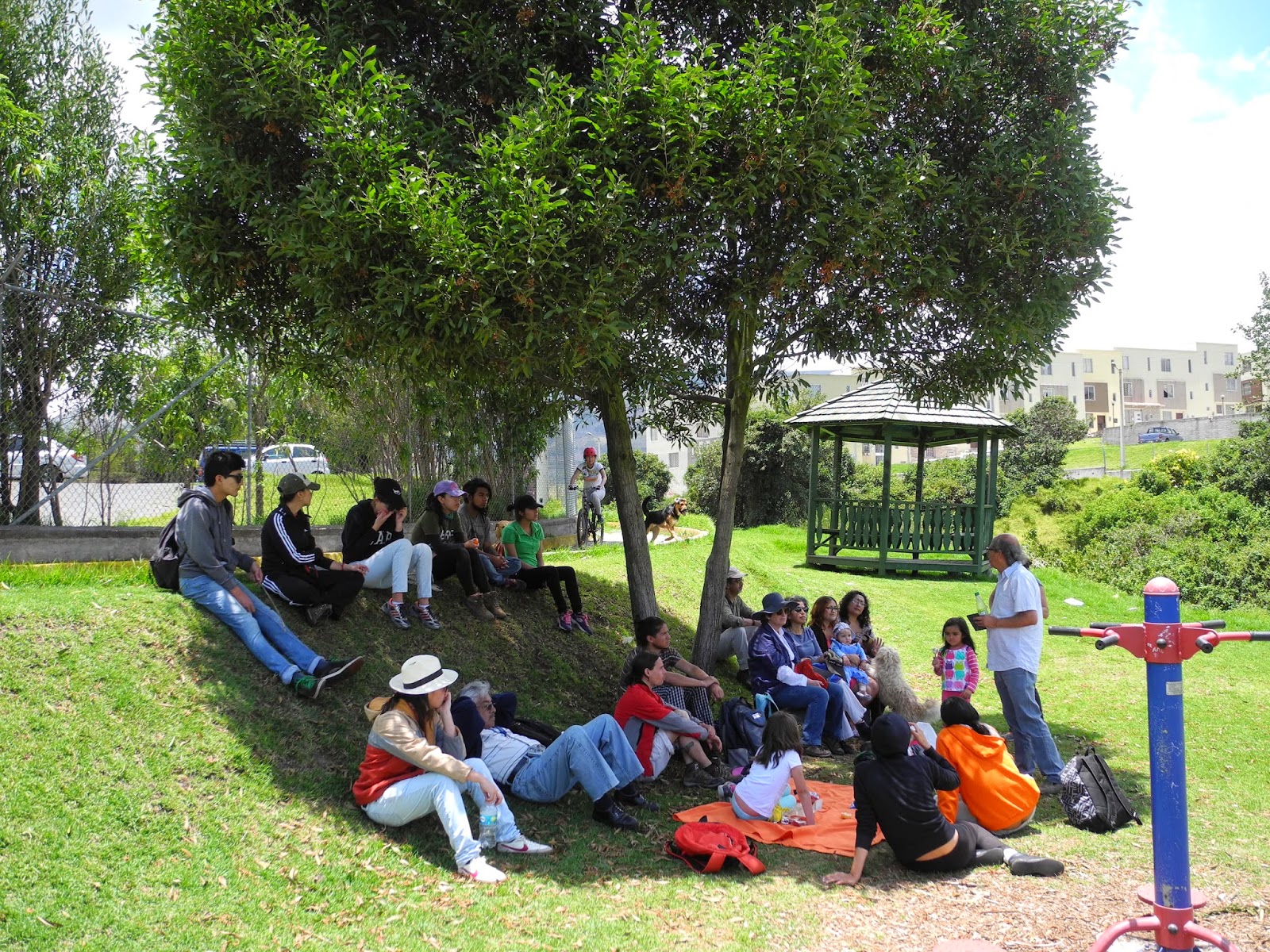
This case study explores the community-led restoration of the Quebrada Ortega stream in Quito, Ecuador, as a nature-based solution to urban flooding and environmental degradation. Driven by a local housing cooperative, residents transformed a polluted stream into a multifunctional green space through collective action rooted in the traditional practice of minga. The project demonstrates how strong community engagement and participatory governance can successfully integrate social objectives, such as affordable housing, with ecological restoration. Despite its success, challenges remain, including limited biodiversity due to non-native vegetation and continued water pollution from upstream sources. The case highlights the need for scaling up such initiatives, supported by technical expertise and policy frameworks, to enhance urban climate resilience.