
Working towards sustainable food system transformation with ROOTED
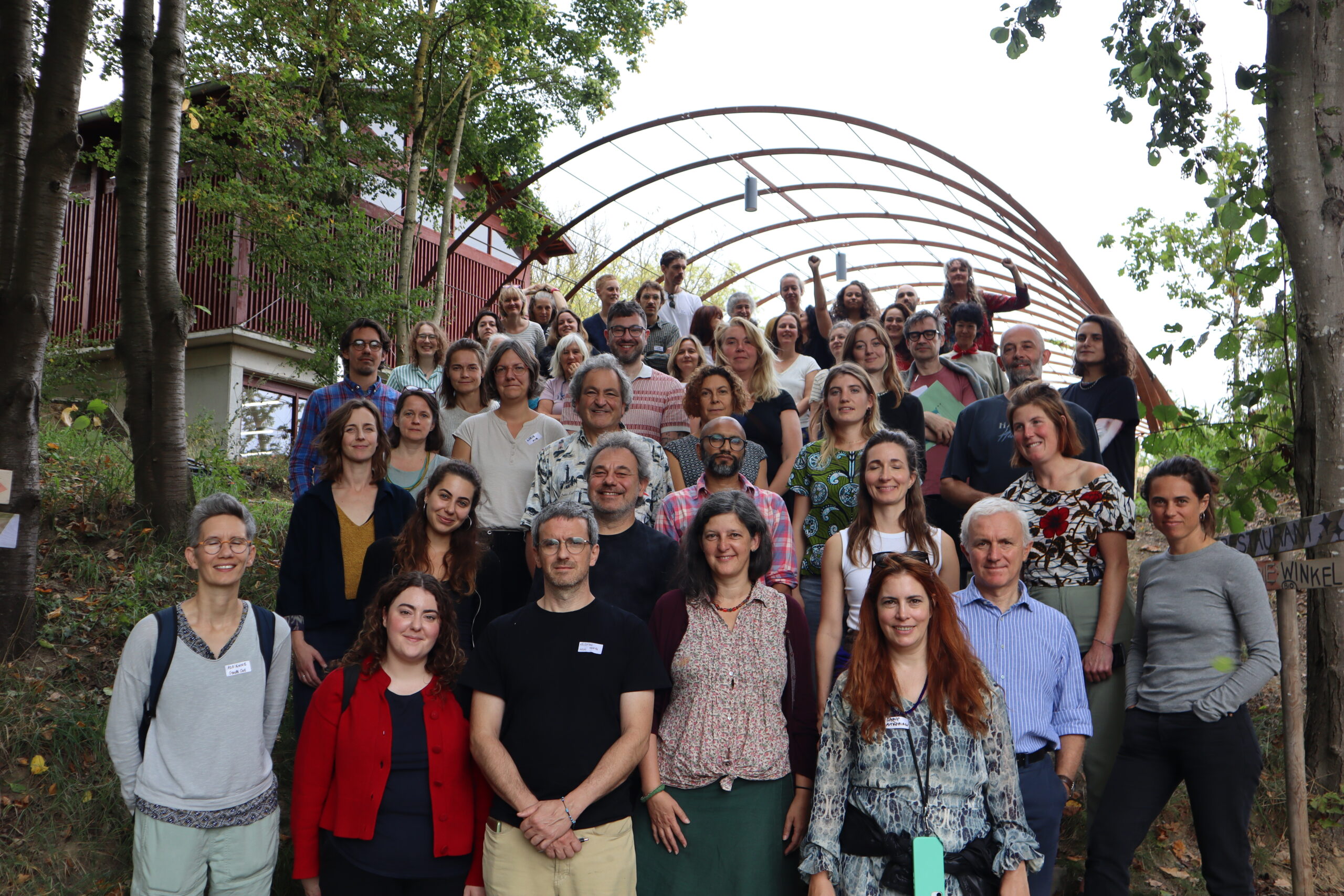
Photos: Carlos Ruiz
The ROOTED Horizon research project began last month, September 2026, and we spent an exciting week at the kick-off meeting in Brussels and Lille visiting various local community kitchens, supermarket co-operatives, and ecological farms. Within the context of food insecurity, polarisation of the food system, and increasing threats to food resilience, the project aims to consolidate Landed Community Kitchens as novel, yet critical infrastructures working towards sustainable food system transformation.
Landed Community Kitchens are social and solidarity enterprises that address food insecurity and social inclusion, whilst sourcing their food from local, sustainable, and agro-ecological producers (Tornaghi & Dehaene, 2020)
Landed Community Kitchens are social and solidarity enterprises that address food insecurity and social inclusion, whilst sourcing their food from local, sustainable, and agro-ecological producers (Tornaghi & Dehaene, 2020)
The project remains grounded within eight Living Labs, a network of 50+ kitchens across 20 cities and 10 countries, mapping their existing and successful capabilities, and identifying areas in which to innovate and how to scale. iUE’s main role is to train, coordinate, and consolidate these actors as experimental sites in Living Labs to ensure they are established and pioneering entities.
COMMUNITY KITCHEN POTENTIAL
Landed Community Kitchens provide an alternative to globalised food systems in which producers are often exploited (Bhattacharjee, 2023), practices are environmentally damaging (Poore & Nemecek, 2018) (and reliant on chemical-intensive production), supply chain networks are globally reliant (Clapp, 2022), and still one third of food produced is lost or wasted (UNEP, 2026). They do so by producing meals and community resilience through solidarity, care, education, inclusivity, and simplifying, localising and promoting sustainable and local food production between growers and eaters. See more about their critical role in our latest article: Community Kitchens: Overlooked Critical Infrastructure in Cities.
The complexity of modern food systems has no panacea. While existing initiatives including food banks and soup kitchens alleviate food insecurity and can intercept food waste, they seldom provide social infrastructures, and act as a complimentary stopgap for the existing wasteful flows of the current food system. However, Landed Community Kitchens resisting the conventional food regime through localized, grassroots initiatives, have potential to reshape food systems.
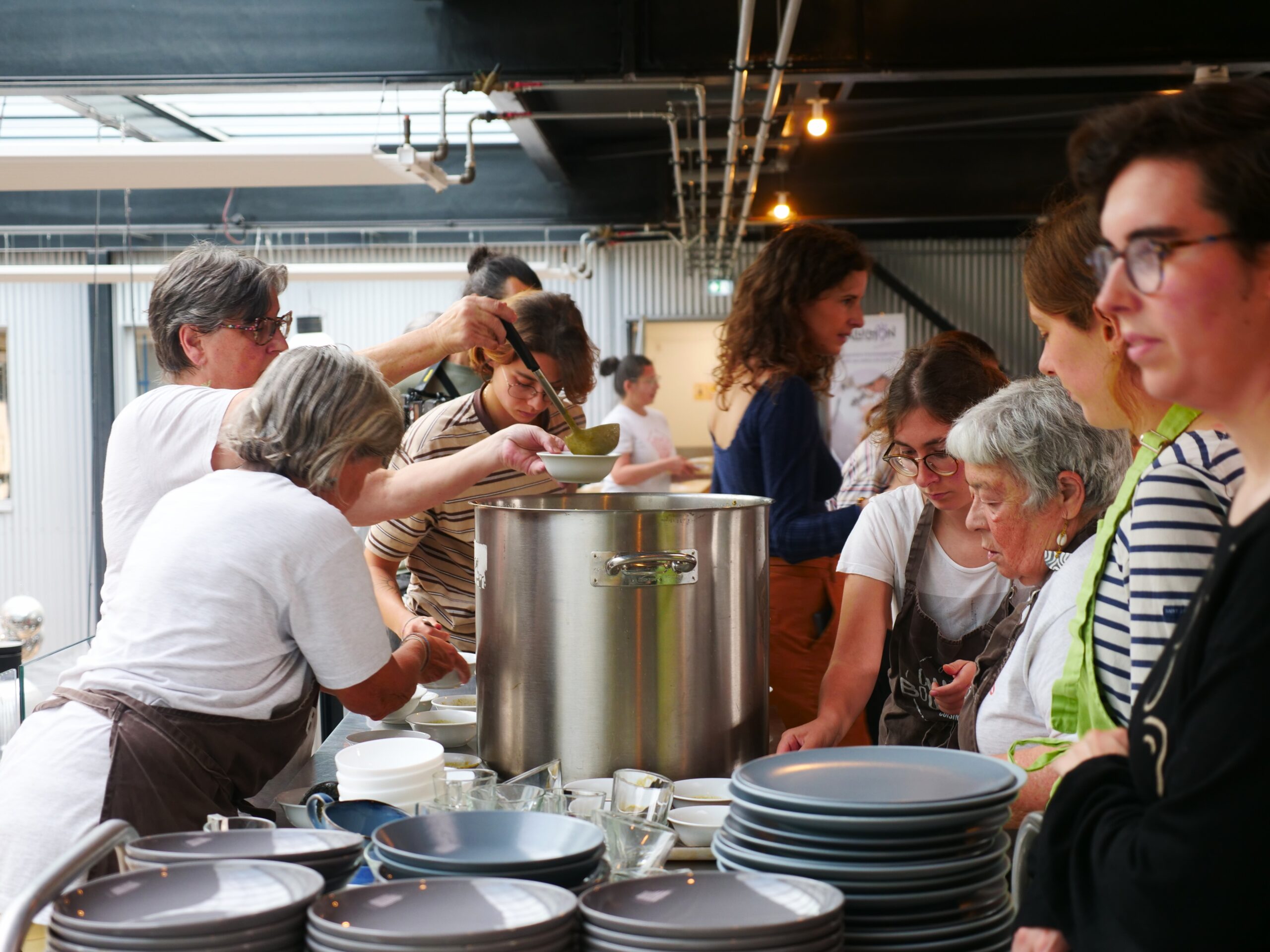
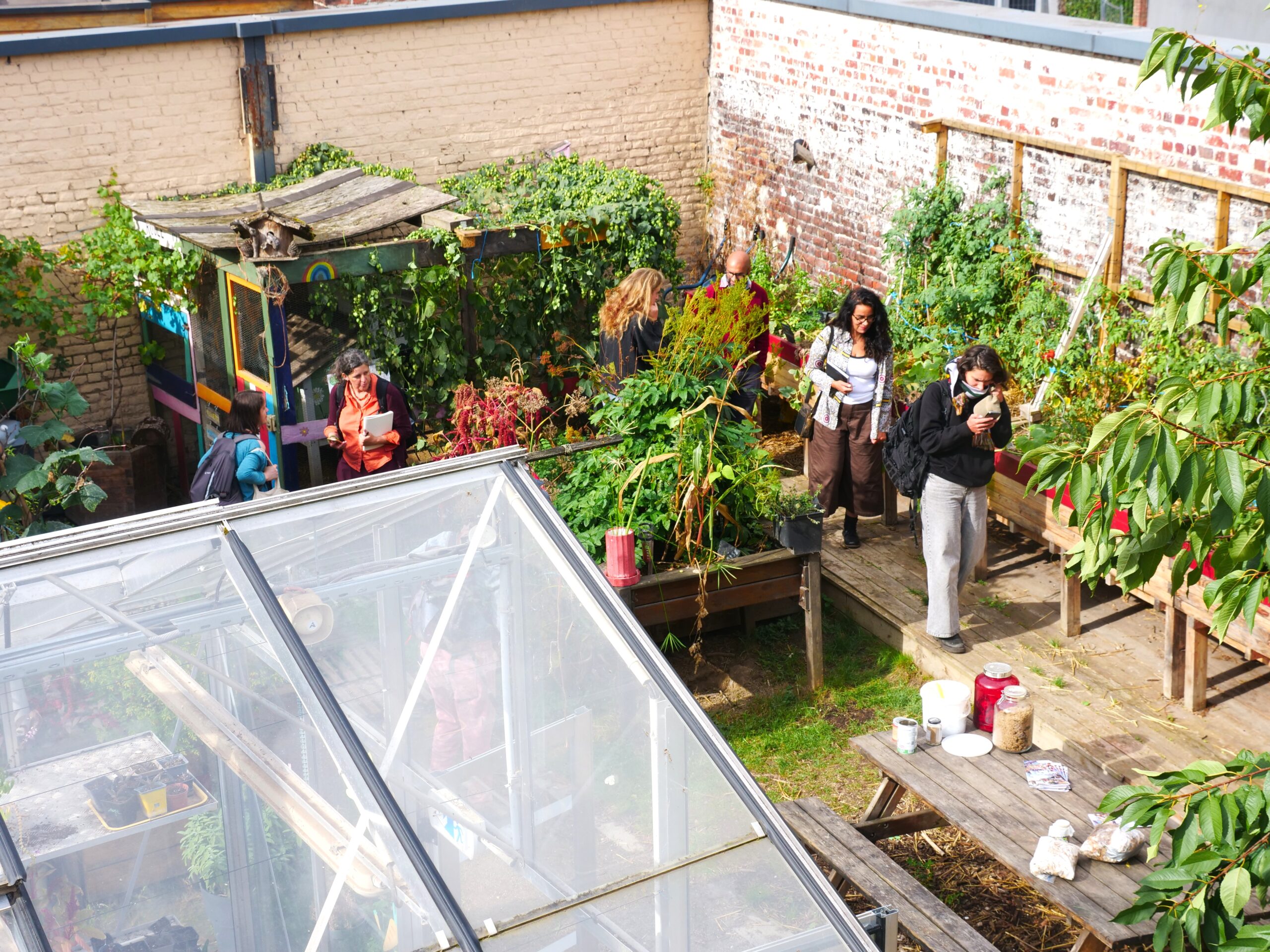
Photos: Yoléne Favier for ROOTED
A NOVEL FOOD SYSTEM TRANSFORMATION INITIATIVE – FOOD SOCIAL SECURITY (FSS)
While in Brussels, we met La CLASS in Schaerbeek, a citizens’ collective working to make quality, sustainable food accessible to all. The project puts the concept of Food Social Security (FSS) into practice. FSS matters because global food production accounts for roughly 30% of greenhouse gas emissions, while the gap between its market cost and social price continues to widen (Patel & Vanloqueren, 2026). Food Social Security (Sécurité sociale de l’alimentation) is a socio-economic initiative modelled on the French Social security system. It extends that logic to food, advocating for good food as a basic right (rather than financially exclusive), rights for producers / farmers, and environmental protection. While FSS addresses households’ economic access to good, sustainable food, community kitchens provide the social infrastructure around it. The two are complimentary parts of the same transformation.
Three pillars underpin the Food Social Security initiative:
- Universality
- Democratically organised agreement
- Funding based on social security contributions
Essentially, “socialize the demand side, fund it through payroll taxes, govern it democratically and let the supply side reshape itself in response” (Patel & Vanloqueren, 2026: 829).
For La CLASS in Schaerbeek, this works as a pooled fund. Signing up to become a member is free, and members do not have to live locally. Monthly, each member contributes to a common fund; the value of their contribution depends on their chosen allowance, their resources, and the number of people and children in their household.
Once calculated, the contribution can be further adjusted by ±15% (upwards or downwards, excluding the minimum). They then receive an allowance, which is -33% or +50% of the contribution (with a minimum contribution of €50) and can then spend that at democratically selected shops.
Example: If your contribution is calculated at €150 based on your resources, you could further adjust this up to ±15% to contribute €127.5 or €172.5. Then each allowance is between -33% to +50% your contribution. So, contributing €150, you could receive between €100 to €225 per month.
Example: If your contribution is calculated at €150 based on your resources, you could further adjust this up to ±15% to contribute €127.5 or €172.5. Then each allowance is between -33% to +50% your contribution. So, contributing €150, you could receive between €100 to €225 per month.
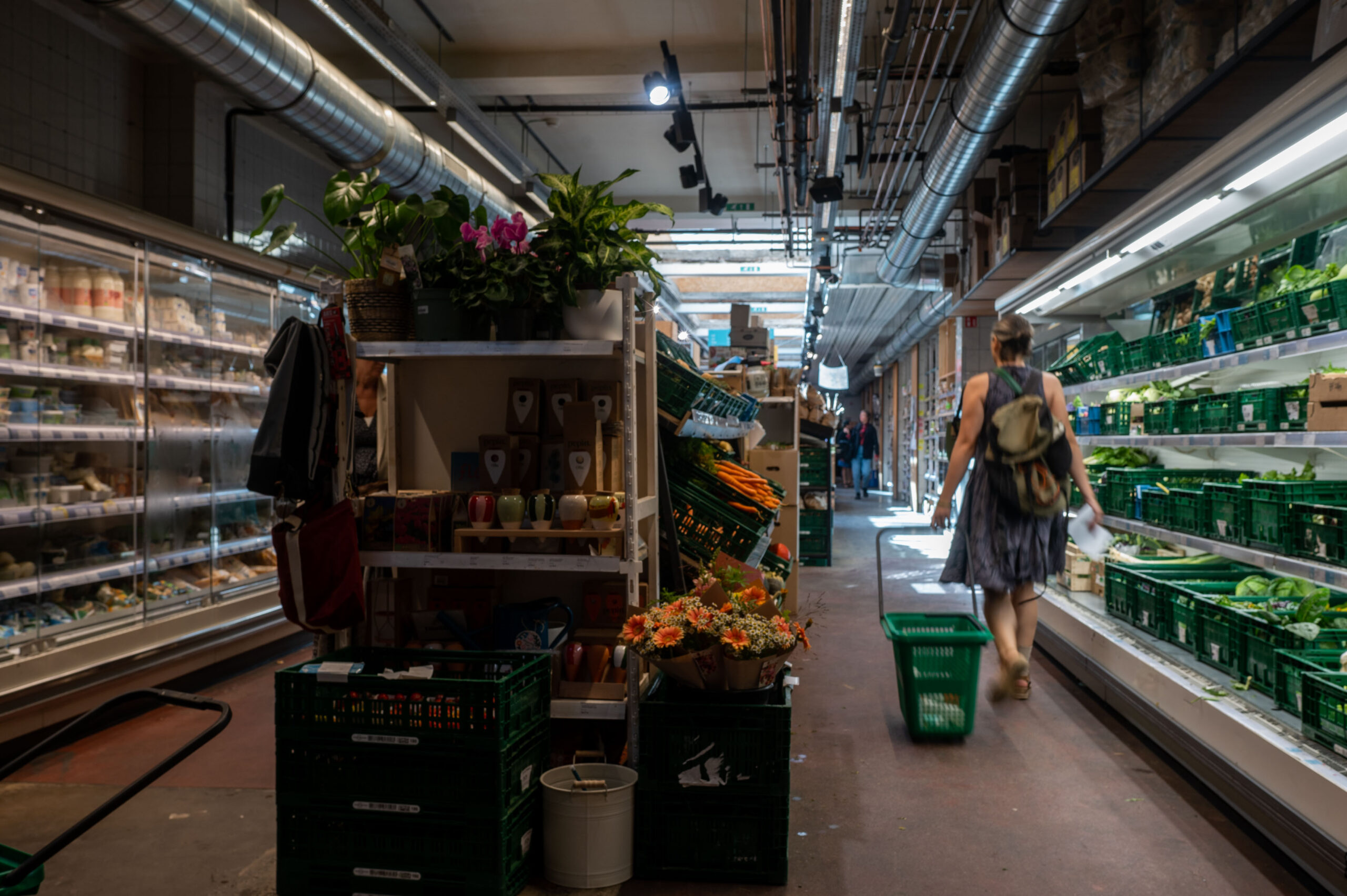
Included shops – as well as the common fund, and other cooperative matters – are self-managed by the citizens’ committee. An agreement scorecard assesses (democratically pre-defined before the fund was launched) each shop on four main criteria: accessibility, purchasing philosophy, products, and governance. Sub-criteria are ranked from 0-2. These criteria aim to support a wider food system transformation. Members can suggest shops, and those shops must reach a 60% threshold of the agreement scorecard points system. We visited one of 13 participating supermarkets: BEES coop, a cooperative market created around 10 years ago, striving to offer quality produce at reasonable price for its cooperative members.
Drawing on the concept of universal healthcare, Food Social Security pools contributions according to means, and redistributes purchasing power through a monthly allowance, while directing spending towards producers and shops that meet democratically agreed environmental and ethical criteria. In doing so, the scheme addresses several dimensions of food security often treated separately in policy: availability, access, utilisation, and stability (World Bank, 2023; Clapp et al., 2021). It also reconnects growers and eaters by making producer remuneration and food quality collective, rather than individual, concerns.
The model also redistributed wealth, even if modestly. Contributions typically scale with income, and members effectively cross-subsidise one another. Though small in scale, this is a meaningful departure from charity-based food banks, which tend to relieve food insecurity without altering the wider system. The democratic governance structure, including the shop scorecard and the citizens committee, further positions members as co-managers of their food system, not only consumers.
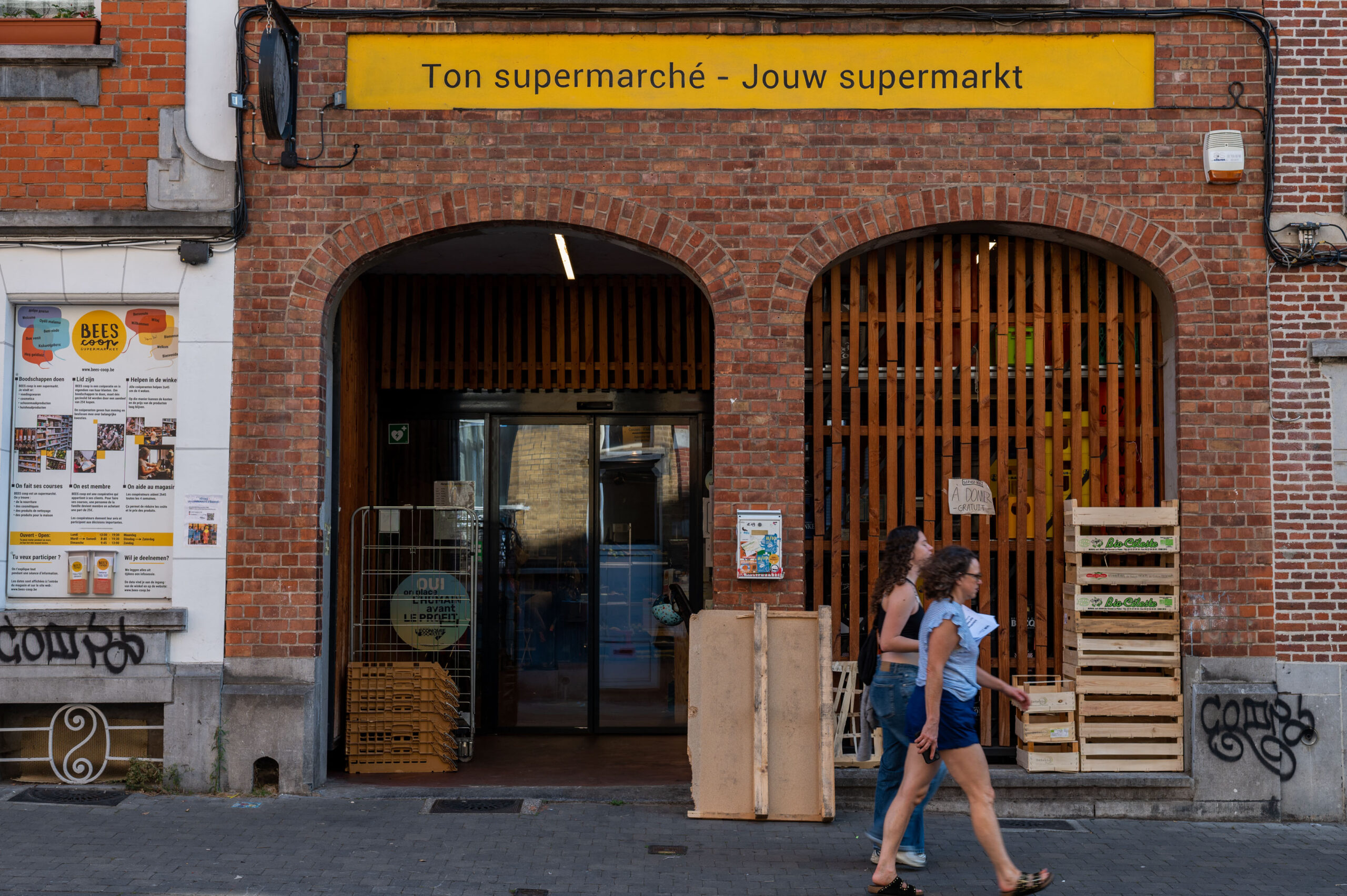
Photos: Daniel Fülöp for ROOTED
Initiatives like La CLASS and BEES coop demonstrate progressive and radical alternatives to the food regime, essential components to food system transformation (Tornaghi & Dehaene, 2020). They challenge the values and spatial dimensions of the current food system, proposing one instead where production and consumption are collectively organised, considered, and non-extractive.
ROOTED aims to consolidate these initiatives into Landed Community Kitchens by enabling resourceful communities through empowering infrastructures. The radical transformations needed to initiate agroecological transitions need to both build alternatives that support agroecological farmers and communities, and actively dismantle disempowering and exploitative processes, disabling arrangements and unjust systems (Tornaghi & Dehaene, 2020).