Towards Resilient Urban Planning Systems
Using the Systems Thinking Approach
A new Mentoring Knowledge Series publication by Cities Forum, and iUE (Institute for Urban Excellence). This paper was written by Didier Vancutsem, Lennaert Dekkers, Gabriela Fontanals Litter, Evelin Raico, Luisa Alcocer Rubio, Tonia Vasile, Nada Soliman, and Ricky Wijaya Umar.
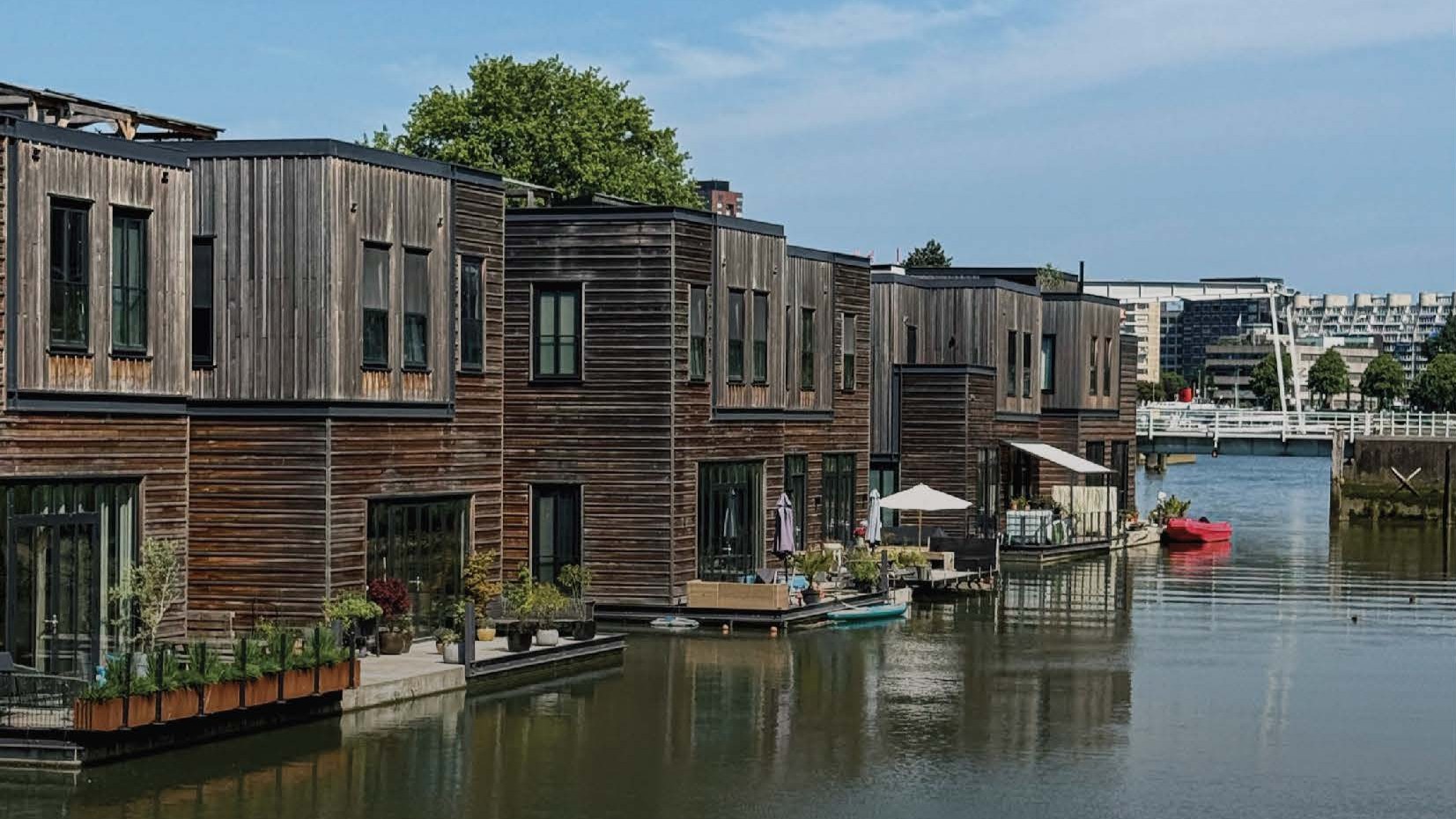
Photo: Floating Homes, Nassauhaven, Rotterdam. Tonia Vasile (2026).
Executive Summary
Urban planning systems are crucial for implementing resilience and the integrated development of urban territories, particularly with regard to adapting to the climate crisis and achieving carbon neutrality. They are not only important for urban planners.
However, current planning systems are based on outdated regulations from previous centuries and have not been convincingly adapted to the challenges that cities and territories are facing worldwide, such as the climate crisis. Such inconsistencies can lead to unintegrated and contradictory developments and controversial decisions, rendering urban areas less adaptable and resilient.
This publication discusses the current state of urban planning and the urgent need to transform planning systems and urban policies into coherent, resilient legal frameworks, including urban governance, using a systems thinking approach. It explores the current state of urban planning systems around the world and examines current urban planning and legislative trends. Based on a description of the systems thinking methodology, the publication analyses and comments on the international planning framework, providing examples of how to implement resilience in urban planning systems and elaborating further on how to improve urban planning systems’ resilience.